





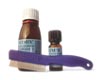








| Frequently Asked Questions (FAQ's) are not only common questions asked by our customers, but questions we have answered over the years for all sorts of concerned Parents, Friends, Family throughout the world thanks to our web presence. Be it via email or telephone we help you with your query. If you have any questions that are not answered below then please feel free to contact us via one of the following methods...
Frequently Asked Questions (FAQ's) on Head Lice... Why has my child got head lice? One day there were no lice, the next day hundreds, how come? Will everyone know my child is using NITMIX? What's the difference between a nit and a head louse? Can I just kill the lot and have done with it? Can I use other oils, Tea Tree or Eucalyptus for example? Can I use conditioner instead of Almond Oil? How much Almond Oil do I need? Who is at risk for getting head lice? How do I tell if my child has head lice? What are the signs and symptoms of head lice infestation? How is head lice infestation diagnosed? Can I always see head lice if they are there? What are the most common head lice treatments? Which head lice medicine Is best for me? Why does my child get more lice than her friend? Where are head lice most commonly found? Do head lice burrow into the skin? Do head lice like clean or dirty hair? Will I get less lice with bleached or dyed hair? How long do head lice survive of the body? Do head lice spread in clothes, hats etc? Do head lice climb on furniture? Should I wash and spray the bedding? Should household sprays be used to kill lice? Should I have a pest control company spray my house? Can head lice transfer on to the pets? Can head lice spread in swimming pools? Should I shave the kid's hair? Should I put the hair up or down? Are head lice resistant to pesticides? Should I treat myself to prevent being infested? Should I keep my kid's home if they have lice? Why are the kids still scratching? What is the best type of comb to use? |
|
| Why has my child got head lice? | Head lice
have been around unchanged for millions of years- they are very
tough and very determined to survive. They will seek out attractive
sites to colonise and will resist all attempts to remove them. Happy
healthy children with lots of friends will bump into head lice sooner
or later, it's nothing personal! |
| Can I wash them away? | Unlikely, they
have special claws and can withstand the most vigorous scrubbing.
Unfortunately you cannot make an attractive head unattractive by washing
alone, all you will get is a very clean attractive head! Back to the top |
| One day they weren't there, the next day hundreds, how come? | Head Lice climb
from one head to another and immediately start to lay between 6 and
8 eggs every day, these will hatch 7 to 10 days later but will be
too small to see. This new generation will be mature in 7 days and
start laying yet more eggs. By the time you spot the tell tale sign
of your child scratching their head the lice will have had a couple
of weeks head start (excuse the pun) and there will be nits and head
lice everywhere. Back to the top |
| Will everyone know my child is using NITMIX? | No, unless of
course you tell them. NITMIX is a blend of pure essential oils
that will leave just a faint aroma in the hair not unlike a perfumed
shampoo or conditioner. Back to the top |
| Is NITMIX a medicine? |
This is not an uncommon question we are asked and giving the accurate answer is very important to us so I will do my best to get this point straight. No, NITMIX is not a medicine. To understand why this is I will copy an extract from the definitions section of the Federal Drugs Administration web site. This gives a clear picture of what they define as a medicine. “…………….. FEDERAL FOOD, DRUG, AND COSMETIC ACT CHAPTER I - SHORT TITLE CHAPTER II - DEFINITIONS¹
………………” Now, they key phrase in this definition is “ (C) articles (other than food) intended to affect the structure or any function of the body of man or other animals….” Which clearly identifies that drugs are intended to effect the function of a patient or the organism invading them to bring about a benefit. Most head lice treatments fall into this category because they
set out to destroy the head louse and/or their eggs and thereby
bring the infestation to an end. They are pediculocides, killers
of Humanus Pediculosus Capitus. It is not the concern of The FDA
how the little critters die, it is the claim that they are physically
changed in some way by the product. NITMIX does not work in this way. Below is the definition , from the same source of a device. “……………………….. (h) The term ''device'' (except when used in paragraph (n) of this
section and in sections 301(i), 403(f), 502(c), and 602(c)) means
an instrument, apparatus, implement, machine, contrivance, implant,
in vitro reagent, or other similar or related article, including
any component, part, or accessory, which is - ……………….” This is more like it. See in section (2), the action of a device may be diagnosis, (though we prefer to say detection ), mitigation, treatment or prevention. And in section (3) the bit about “affect the structure or any function of the body of man or other animals”. These are very important points. NITMIX is more than a product, it is an approach to relieving the condition of head lice by simply removing the live lice from the host and discouraging re-infestation. The removal is achieved by a refined version of wet combing which is perhaps the oldest form of relief from any type of hair or skin affliction. Even modern research confirms its effectiveness is hard to surpass (1). Lice coated in a viscous fluid cannot move freely about the scalp and cannot therefore evade combing by moving away from the inevitable disturbance caused during sectioning of the hair in preparation for combing. Even very small newly hatched nymph lice are very effectively caught up into the gaps of a plain fine toothed combs but, because the chosen oil is not overly viscous, they are not bound into the hair by surface tension or adhesion. A simple harvest of all sizes of lice, by this version of wet combing, reduces the population of lice very quickly. The larger, and more mature the lice, the more readily they come out of the hair. Typically larger sexually mature lice are the first lice to be removed stopping the supply of fresh eggs immediately. Smaller immature lice may be left for a couple of days until another combing session which removes the next crop of lice together with most, if not all of any newly hatched nymphs. This process is simply repeated until no further lice can be found in the combing process. The egg supply is exhausted rather than attacked and destroyed by a pediculocide or ovidulocide. These removed lice are perfectly healthy and should be flushed away in a drain to ensure that they do not find their way to a new host. They have been removed from their host and food source but not damaged or destroyed in the process. We can go on from here to provide respite from re-infestation. Human head lice thrive only on human heads and must have the capacity to recognise that specific environment or they would never have survived as a species. A simple inspection of head louse physiology shows us that they do not possess long range sensory organs and therefore they can’t detect a new potential host from any distance away and initiate moves to spread to that host. But spread they do! They move from one head to another when the opportunity arises during head to head contact. Once in a new place the louse must quickly establish if it has made a good move and has arrived on a suitable host, is there food there? As far as we can ascertain head lice taste or smell us. Something about human skin chemistry tells head lice that they have arrived in a suitable location where there is food, human blood. This is a black and white kind of decision, head lice don’t have much capacity for judgement, you are a food supply or you are not. This is a huge weakness and it can be exploited to our benefit. What if the head louse doesn’t recognise this new environment? What if the only scent it could recognised was masked by another scent? Now, this is critical to understand the difference between a medicine and a device. We are not saying that we should remove the human scent or disable the sensory device of the head louse. Neither is necessary. We only have to put another pungent scent into the environment to cause the louse to fail to recognise an opportunity. The medical approach would be to isolate the skin chemistry of the host and alter it or to medicate the louse in order to disrupt the sensory mechanism. An analogous situation is the difference between perfume and deodorant. Perfumes leave our underlying body scent unchanged but masked over. The change is brought about by overwhelming the undesirable odour with a, hopefully, more pleasing smell. Deodorants get to work on the chemistry of bacteria that grow on skin that produce the smell. NITMIX can be used to maintain a healthy lice free state once an infestation has been cleared up. It is still necessary to continue to comb regularly because we cannot prevent head lice paying a head a visit but we want to be able to comb it out as an isolated visitor rather than evicting it as an established resident. So in both instances, removal and prevention, NITMIX is acting as a device to assist combing as the primary way of controlling head lice 1. De Maeseneer J, Blokland I, Willems S, Vander Stichele R,
Meersschaut F. Wet combing versus traditional scalp inspection to
detect head lice in schoolchildren: observational study. London:
BMJ Volume 321, Pg 1187-1188, 11 November 2000. |
|
|
| What's the difference between a nit and a head louse? | A nit is the
common name for the little white egg cases that you see in clusters
close to the skin. They are so well glued on that you are more likely
to pull out the hair than pull off the nits. If the nits are part
way up a strand of hair don't worry, they will have hatched a long
time ago, just let them grow out. Head lice are the creepy crawly things! Back to the top |
| Can I just kill the lot and have done with it? | Yes and no. You
may be offered a chemical treatment that works instantly but results
are patchy, some lice are resistant and some heads don't take kindly
to such harsh treatment. But what about tomorrow? You will be sending
you child back to school again with a very attractive head just ripe
for some new guests. Sound familiar? Back to the top |
| How does NITMIX help then? | Two ways:- Removing existing pests- We recommend that you use the simplest and safest method of combing through the hair and picking out the visible lice but with some help. Head lice move quickly between hairs close to the scalp so why not slow them down. Rub sweet almond or grapeseed oil into the roots of the hair, to a louse it is like running through glue. If you add NITMIX to the oil it will stun the lice for a couple of hours so that you can really get at them (remember to wash them away because they will recover again later on). You will need to repeat the treatment every few days so you can remove the rest of the lice as they get bigger. Breaking the cycle- What happens for many parents, is that as fast as they remove lice, more are climbing on board, and they get stuck in an endless cycle of combing and chemical treatments.
THIS BIT IS VITAL. Start leaving a preventative trace of NITMIX in the hair as soon as you can because this will discourage more lice from climbing on board your child's head and setting you back on the same old cycle! |
| How often should I use NITMIX? | When treating-
a case of head lice. Every 2-3
days for about 2 weeks. Remember it will be difficult to see the very
tiny lice, when you treat again in a few days time they will have
grown rapidly and will be easier to see, but won't be mature enough
to have started laying their own eggs. When Preventing- further lice. Your goal is to have a trace of NITMIX in the hair at all times when your child up and about. Put NITMIX in the last rinses, when ever you wash your child's hair. Because NITMIX only contains blended essential oils it will naturally evaporate over a couple of days. If the weather is very warm top it up each day. Tip- Some parents have been very successful by putting 20 drops of NITMIX in half a litre of water in a hand spray and spraying every day while brushing the hair. Why not keep it by the door or with the car keys to remind you? Back to the top |
| Can I use other oils, Tea Tree or Eucalyptus for example? | Whilst these
most commonly quoted oils have their uses, we have found Tea Tree
to be ineffective for head lice. Both Tea Tree and Eucalyptus are
relatively aggressive and can cause skin irritation. If in any doubt
seek individual advice from a qualified therapist. Back to the top |
| What is the Almond Oil for? | Adult lice move
rapidly between hairs and can be very awkward to catch, there is nothing
more frustrating than spotting a louse, chasing it all over the scalp
before loosing track of it and loosing track of where you have got
to in your search! Back to the beginning and start again. ( Yes that's
how we used to do it too.) Almond oil will simply bog head lice down
so that you can work systematically through the hair without the lice
running off all over the place. If you add NITMIX to the almond
oil the head lice will usually slow down or even appear to be dormant
for about an hour so that you can easily pick them out. Remember to
wipe any captured head lice off on to a tissue and flush them away
because they will come round again and be off looking for a new home. Back to the top |
| Can I use conditioner instead of Almond Oil? | Yes, get stuck
in as soon as possible, you will be doing a lot of good by starting
now with whatever you have got to hand. If you want to use NITMIX
with the conditioner we have to say that some ingredients in some
conditioners may reduce the effectiveness of the essential oil components.
Conditioner may become sticky during the treatment. Almond oil is
the most widely used carrier oil for essential oils and will not reduce
the benefits of NITMIX. If you have a case of head lice, and
want to get stuck in straight away use the conditioner or even soya
or sunflower oil until your order arrives. ( We tend not to recommend
heavier oils like corn or olive oil as these can be more difficult
to wash out but they are not harmful) Back to the top |
| How much Almond Oil do I need? | In most cases
a 100ml bottle per child should be enough. However, if the hair is
either very thick or long an extra botlle may be required. Back to the top |
| What are head lice? | Head lice are small creatures that
live and breed only on human heads. They have been with humans for thousands of years. If you dig up an
ancient burial site even Kings of Eygpt had head lice.
Back to the top |
| Where do head lice come from? | They come from your friend's heads. They are the only people you have enough close contact with to catch head lice. Sharing a hug or cuddle, sitting close enough to share a book or a computer screen at school would all be typical ways to pass on head lice. Back to the top |
| Who is at risk for getting head lice? | Because we don't live in isolation anyone can come into contact with head lice. It has nothing to do with age, social groups, money, cleanliness, it is just luck, who you happen to know.
Back to the top |
| How did I get head lice? | Head to head contact. Head lice walk along a hair strand, then grab the next available hair strand. If that second strand of hair is yours then you have a head louse in your hair.
Back to the top |
| What do they look like? | They are never bigger than a sesame seed, you know the ones on a burger bun. And their colour varies between light golden brown and dark brown. When they first hatch they are very tiny, about the size of a grain of sand. Their color changes when they feed and fill up with blood, this makes them dark brown. As they digest their meal they turn lighter and lighter.
Back to the top |
| How do I tell if my child has head lice? | Always suspect that a child can have head lice any time. They are always around and if your kids have great social lives or are at school then assume that from time to time they will get head lice. You can never say for sure "my kids are clear of head lice".
Back to the top |
| What are the signs and symptoms of head lice infestation? | "Tell tale signs of head lice".
· Itching and scratching
· Pale pink rash on the skin above the hairline around the back of the neck and behind the ears
· Small mobile bugs on the scalp and in the hair about the size of a sesame seed or smaller
· Little white/cream buds on the hair shafts, usually near the skin, that won't slide down the hair when pulled
· Very tiny black specs in the roots of the hair, on the pillow or in your comb. These are either tiny baby lice or lice faeces.
Back to the top |
| How is head lice infestation diagnosed? | Head lice are diagnosed by actually finding live head
lice in the hair. Some clinics send away samples to labs but this is a bit dramatic. A simple combing session with a fine
toothed comb and NITMIX Wet Combing Aid will soon drag out any active lice.
Back to the top |
| Can I always see head lice if they are there? | Visual inspection is a very poor way to check for head lice.
In a study from Israel diagnosis of louse infestation using a louse comb was found to be four times more efficient than direct
visual examination and twice as fast. The direct visual examination technique underestimates active infestation and detects past,
non-active infestations. A Belgian study, reported in the prestigious British Medical Journal found that "False results are a worry since they lead to non-infested children being treated unnecessarily and infested children missing out on effective eradication treatment. The study suggests that despite the extra effort involved, wet combing is the gold standard for detecting head lice." In the study 30% of supposedly positive results and 10% of negative results turned out to be wrong. One in three kids would have been treated unnecessarily and one in ten kids with lice would have gone unnoticed. Back to the top |
| What are the most common head lice treatments? | The most common active ingredients are pyrethrums,
permethrins, lindane and malathion. Pyrethrums are derived from chrysanthemums. Just because they occur in nature doesn't make them any less concerning, Nature is more than capable of producing very powerful poisons. Permethrin, a synthetic pyrethrin, is used to control insects on animals, house or gardens, and in agriculture. If you read the active ingredient label on wasp & hornet killer, flying insect killer, ant & roach killer, house foggers and fumigators, yard sprays, and commercial insect killers, you will see you may be applying the same chemical to your child. (Although at different concentrations depending on the product.) Lindane is an organo-phosphate, yes that's right the same type of chemical as used in sheep dip, nerve gas and timber treatment. In the progressive state of California it is banned outright due to concern over it's potential to cause cancer and nerve damage while also polluting the water supply. Malathion is another organo-phoshate produced to a drug grade (USP) which, in its less pure form, is used widely to kill medfly and mosquitoes. It is a prescription only preparation and is highly inflammable so watch out! There is a lot of concern, information and, no doubt, mis-information about all these products about. We don't know any more about what it true and not true than you do, save to say, it would take a vast amount of research to sort it all out and that money is just not being spent in that way. What we do know is that parents are not getting the results they want from some of these products and that's what counts. Back to the top |
| Which head lice medicine Is best for me? | Whichever one your are comfortable using and produces
the results you are looking for. It is a parent's own decision whether to
use a manual method to remove lice or a chemical solution that causes lice
to die. There are sources of information from the manufactures of lice products that attest to their safety. There are also a growing number of sources of information about possible harm being done to some children by these products. Parents have to weigh up the information, as best they can. NITMIX's only contribution is a reminder that head lice have never hurt any child and therefore we don't consider it to be worth any risk whatsoever to get rid of them. We believe in the motto for any treatment; "Firstly, do no harm" Back to the top |
| Why does my child get more lice than her friend? | Not all families experiences of head lice is the same way.
Some kids are untroubled whilst others seem to be cursed.
We have experienced both situations with our two children, one was a head lice free zone, the other a magnet. There may be many reasons such as; who your kids play with, how they interact with other kids i.e. do they cuddle up to their friends a lot. Some kids also get a lot more lice than their own brothers and sisters and friends in the same class. Our younger daughter was like this. Lice just love some kids and it's their skin chemistry that does this. Until their yummy skin scent is hidden by using NITMIX as a preventative they continue to get far more bouts of lice that their friends and classmates. Back to the top |
| Where are head lice most commonly found? | Lice need warmth
as well as food from their host, this means they stay close to the skin and
especially around the back of the neck and behind the ears. There are big
blood vessels under the skin like hot water pipes and hair hanging down like
a blanket keeps the heat in. When you lift the hair you can sometimes see a
soft pink blush on the skin and little white eggs in the hair itself. You
should check all around the head as some lice will stray further around the head.
Back to the top |
| Do head lice jump or fly? | Head lice walk, nothing else.
They have stubby hooked legs and cannot jump or fly, no way, no how. If you
see something jump or fly near your child's head it will be a flea or a
flying insect of some description but not lice.
Back to the top |
| Do head lice burrow into the skin? | Lice don't burrow
into the skin, again their physical makeup doesn't make this possible. They
stay on the surface of the skin or on the hair shaft.
Back to the top |
| What color are head lice? | Head lice have a hard ex-skeleton, a
sort of bone on the outside like a shell and this is a light brown colour but
very thin. In clear light this makes them a light brown color. When they
feed they fill up with blood this changes their color to dark brown. As they
digest or excrete their meal they lighten up in color. So when looking for
lice you have to remember that they may be any color from light brown to dark brown.
Back to the top |
| How do head lice grow? | Head lice grow in stages,
climbing out of their hard shell each time. This leaves behind a dead skin
which is very light brown and looks like a dead louse. These empty shells
will come out on your comb with NITMIX Wet Combing Aid and may make the
situation look worse than it really is. They may also fall from the hair
on to pillows which caused people to suspect that head lice are spread this way.
Back to the top |
| Do head lice like clean or dirty hair? | Head
lice don't care what the condition of hair is. They are only interested in
food, warmth and shelter. Unwashed hair will contain more debris and many
head lice egg cases and shed skins but that only makes the situation appear
worse than it is.
Back to the top |
| Will I get less lice with bleached or dyed hair? | There
is little evidence that hair treatments make any difference to the incidence
of head lice.
Back to the top |
| How long do head lice survive of the body? | Head
lice die from lack of food or moisture in about two days if dislodged from a
head. They may not live this long if it is very cold or they had not fed
before being dislodged. Being dislodged means almost certain death for a head
louse so they will avoid this if at all possible. They don't wander on to
furniture or clothes very often as this would result in the death of the louse
in most cases.
Back to the top |
| Do head lice spread in clothes, hats etc? | A head
louse could be transferred by a hat or scarf but this is a very minor
transmission risk. They have to be on humans to survive so they are highly
unlikely to make the mistake of climbing onto anything other than another head
in the first place! Anything other than a head generally means death to a
head louse. Obviously you can avoid this risk by not sharing hats and brushes
tc but it is not a huge risk in the first place.
Back to the top |
| Do head lice climb on furniture? | Head
lice don't transfer via the furniture, as above, these are tiny, tiny risks and
not really worth worrying about. A quick vacuuming to make you feel certain is
he absolute maximum effort, if you must.
Back to the top |
| Do I need to scrub the house? | Scrubbing
the house is a complete and utter waste of time. Autralian scientists Speake
and Buettener (1999) from James Cook University did a study by sweeping the
floors of 100 classrooms used by kids that they knew were teeming with head
lice. You know how many lice they found? None, nadder, zip! While the loors were being examined the kids were inspected elsewhere and over 7,000 actual lice were removed from the kids. 7,000! And not one found its way to the floor. Back to the top |
| Should I wash and spray the bedding? | In a
different piece of work Speake, Cahill and Thomas (2003) found the chance of
getting a live louse in a pillow after whole nights sleep was about 1 chance
in 1000. In other words you could sleep in the same bed for nearly three years
before you got a louse on the pillow. Spraying bedding with pesticide sprays
just doesn't make sense.
Back to the top |
| Should household sprays be used to kill lice? | Do not
fall for this possibly dangerous rubbish. You are being ripped of and you
are putting possibly toxic materials into your house to kill lice which ARE
NOT THERE!
Back to the top |
| Should I have a pest control company spray my house? | Any
reputable Pest Control Company won't even take your money because they know
this is rubbish. Any Company that says they will is not a Company I would
trust in my home. Ask Steven Blum, Director of the National Pest Control
Association or look it up in the Pest Control Operators Handbook ( 7th Ed)
"Not a job for us" They say. Shame no body told the " Environmental Spray"
makers.
Back to the top |
| Can head lice transfer on to the pets? | Head
lice don't transfer via your pets. Pets have there own fleas and lice, some
of which will bite humans given the chance but you should treat the animals
appropriately if you suspect they are infested not yourselves. Cat and Dog
fleas have more stages of development than head lice and can live in bedding
and carpets. Generally cat and dog fleas end up in your carpet and show up as big lumpy bites around your ankles. Back to the top |
| Can head lice spread in swimming pools? | Transmission
by sharing a swimming pool or spa is nonsense. Don't worry about it.
Back to the top |
| Should I shave the kid's hair? | Shaving
heads always cures a case of head lice but most kids hate it. It is most
likely unnecessary and will cause the kids to be teased or ridiculed at school.
So far we at NITMIX have never known it to be necessary to shave hair off to
clear up a simple case of head lice.
Back to the top |
| Should I cut their hair? | Cutting
the hair shorter does not really reduce your workload much and we wouldn't
recommend it especially it the kids are going to resent it. Most head lice
activity takes place close to the scalp where the warmth and food is. Once
long, thick or curly hair is oiled it can be combed very easily and rapidly
and length makes very little difference. Dred locks are about the only
genuinely problematic kind of hair as combing is pretty well impossible.
Back to the top |
| Should I put the hair up or down? | If
long hair is left flowing loose it will increase the possibility of direct
contact with someone else's hair and hence passing on head lice, tying it
back is therefore sensible. Much head to head contact is actually around
the front of the hair when little kids put their heads down to share a
secret or a book, hairstyle doesn't make any difference in this instance.
Back to the top |
| Are head lice resistant to pesticides? | Head
lice may be starting to get resistant to some types of head lice treatment but
his is difficult to prove absolutely. This kind of work needs very large
studies conducted under very carefully controlled conditions. These tests are
very difficult to conduct, cost a lot of money and are usually only conducted
to prove that a new treatment works before it is sold to the public. It is very
difficult to see who would want to provide a lot of money to prove a treatment
has stopped working. Public Health Authorities generally don't have the money
and also have rather more important issues to deal with.
One day we may have an answer to this question but in the meantime you can avoid the uncertainty by not trying to use any treatment that attempts to kill head lice. Back to the top |
| Can I prevent head lice? | You
can prevent head lice. You could isolate your kids but that is really not
sensible. You can conduct a daily search of their hair and remove any little
visitors before they have a chance to lay eggs and nip the problem in the bud
which would be time consuming but effective.
You can also make life difficult for head lice by disguising the kids natural body scent. This means that any visiting head louse won't realise that it is actually on a suitable host and just leave the hair without feeding or breeding. NITMIX, used as a disguise is not a treatment or "repellent". Head lice like our kids because they offer warmth, food and shelter. If any of these things are missing they cease to be a suitable climate for the head louse to thrive in. We don't want cold kids and we discussed shaving heads earlier and that is not advisable. So, that just leaves the food to disguise. Head lice are very host specific, in other words they only live on human heads. That is the scent that says "FOOD". If we disguise that they loose interest in us entirely. NITMIX can be used to provide a new smell in the hair that is enough to cover over human scent while not medicating the child or the louse in anyway but helps to retain lice free healthy hair. Back to the top |
| Should I treat myself to prevent being infested? | Don't
ever resort to putting lice treatment on yourselves or your kids "just in case".
You should only treat proven cases of head lice or use a wet combing aid to
help you establish that there really is a problem to solve. Very few treatments
that act as a head louse killing agent can possibly be used as a preventative
as you must wash them out completely after use. If you are leaving any useful
evel of residue of these pesticides in the hair then you risk exposing your
child to its toxic effects over an extended period.
Back to the top |
| Should I keep my kid's home if they have lice? | There is a
huge variation in approaches to head lice in different parts of the world.
Generally in America kids are excluded with head lice or even nits and it causes chaos, financial hardship and much stress to working parents, especially single parents. But from our experience we get more enquiries and letters from desperate parents from America than anywhere else. They also seem to have just as many cases of head lice as anywhere else. In the UK, Australia, New Zealand and most of Europe head lice are dealt with by parents after a simple letter from school is sent home asking for everyone to check their kids hair. Some parents get stressed when simple over the counter treatments don't work but they aren't under financial pressure or social pressure from other parents.The kids get treated by whatever means their parents choose and back to school they go. Our sympathy at NITMIX is definitely with the live and let live attitude outside the US. No matter what the arguments about treatment and policy one fact remains, head lice are perfectly normal condition for a child to experience and are perfectly harmless to the child. More harm seems to occur when parents resort to using strong measures to remove head lice or suffer financial stress trying to get their kids back to school. In 2002 the American Academy of Pediatrics (AAP) produced a clinical report on dealing with head lice in a school setting which contained a well balanced summary of the tiny health threat posed by head lice and, amongst other things, recommended the ending on exclusion and "No Nits" policies. Unfortunately it also trotted out the usual pesticide based recommendations which many parents are finding less and less acceptable. In it's defence the report also covered the merits of manual removal and touched on some alternative treatments. In response the National Pediculosis Association (NPA), which is in effect an anti pediculocide lobby group, issued a broadside attack on the whole report's recommendations especially, the pesticide treatment regime, ending the No Nits policies and ceasing inspections of children in school. No wonder poor parents are confused! We feel that the NPA rather threw out the baby with the bath water on this one. If read impartially the AAP report contained some very balanced and rational arguments as to why head lice shouldn't meet with a hysterical response and underlined several times how harmless head lice are. So far so good. If parents took this part of the report and just said to them selves " OK, but I don't want to use the poison stuff" They would have found another treatment and everyone would have benefited. By supporting a continued head lice ban the NPA actually run the risk of driving desperate parents straight into the arms of the pesticide peddlers because they don't consider head lice to be being harmless. We fear they may have scored a bit of an own goal here. As ever, parents should make up their own minds by reading the original articles in the Press sections of the AAP and NPA web sites. Good luck! Many parents will complain that they don't want their kids exposed to lice but this is pandering to very selfish and often irrational fear. We don't exclude kids with a runny nose, or warts or many other normal childhood problems. We teach tolerance of differences and disabilities. So we should with head lice. If schools become places where irrationality and intolerance form policy we really are heading for trouble. Head lice are just harmless little visitors. Another point has to be made here. Years ago smallpox claimed the lives of our kids and a huge effort managed to eradicate it World-wide. But head lice are not in this category. Suspicion that head lice may transmit disease has hardly got past the supposition stage and there certainly aren't waves of disease being passed around western schools as a result. There will not be a time when mankind gangs up on head lice to remove them forever, it just isn't going to happen. So please don't start campaigns or protests about it, just learn a few simple steps to brush them of your kids, if and when they get them and move on. Back to the top |
| Why are the kids still scratching? | Most
living creatures have little mechanisms in their bodies for fighting off
anything that invades them. They also have warning systems to tell us
something is not right. When we get stung or bitten by a bug a very
complicated reaction gets set off which is partly warning, partly healing.
Swelling, redness and itchiness are all part of this reaction.
With head lice we need to get bitten many times before we feel the itchy bit, some people don't get itchy at all. When you have cleared away head lice the old bites don't know that the threat is over and some of the healing is still going on. Hence the itching often continues for quite a while after successful treatment. You may also get a little infection in the scratches you make on your own skin these usual heal up on their own. You could use a little medicated shampoo to help them heal up quicker. If the itching really goes on a long while ask your Pharmacist for a mild anti-histamine spray, cream or tablet just to tell the body it is all ok to shut down the warning signals. Back to the top |
| What do the eggs look like? | Head
lice eggs are a small bud like attachment to the hair strands, never on the
scalp. They are variously described as white, grey or cream. Most are laid
very close to the scalp where heat from the body keeps them warm however in a
very warm humid climate they may be further away from the scalp. The further
from the skin the more likely an egg is to be old, cold, empty or dead.
There may be some differences in appearance between live eggs, dead eggs or empty eggs but under normal lighting conditions it is unreliable to try and tell them apart. Head lice eggs are easily distinguished from other rubbish in the hair. If you put your finger nail below the egg and try to slide them down the hair shaft they don't budge at all. Flakes of skin, dandruff, cradle cap etc all slide along the hair. Back to the top |
| How long do head lice live? | Head
lice live about a month after hatching. It takes about a week for an egg to
mature and hatch. The nymph louse grows to maturity in about a week to ten
days. This leaves about three weeks of active life in the hair.
Back to the top |
| Do all head lice lay eggs? | Not all
the lice you see can lay eggs. Some may be male lice, others unfertilised
females, these don't lay eggs. When combing hair parents sometimes spot large
dult lice in the hair and fear they may be in the grip of a head lice outbreak but nothing else happens. They have probably found a male or unfertilised
female.
If you suddenly find an adult (large) louse on previously clean hair it has almost certainly just climbed onto this head from someone else. Large adults can't just appear. If a mixture of large and small lice is found then a full-scale infestation is present. When little lice are found they must have hatched on that head juvenile lice do not travel from head to head they are just too weak and too small. Back to the top |
| What is the best type of comb to use? | The best
comb is one that is fine enough to catch all sizes of lice and also detach
eggs. That means very fine indeed. However, very fine combs won't go through
some kinds of hair without tugging, pulling or snagging.
The best way to get around this is to use a very, very fine comb but lubricate it so that the hair still slides easily around the teeth. NITMIX Wet Combing Aid achieves this for all types of hair. One way to make the comb work even harder is to turn the comb at an angle as you pull it through the hair to make the strands bend or zig-zag through the teeth. With well lubricated hair you can create a quite sharp turn through the teeth which catches egg cases and forces them off the hair strands. Back to the top |
| Who are WORLDPAY? | WORLDPAY
are totally separate from NITMIX. When you order from us we see only
the details of your order after it has been authorised by your card
company. ALL other details that you enter in regard to your credit
card go directly to WORLDPAY within their secure computer systems. NITMIX never see your financial details. WORLPAY have been at the cutting edge of e-commerce solutions since 1993. Please feel free to check them out at www.worldpay.com Watch the bottom left hand corner of your screen and you will see the jump to the WORLDPAY server and the "LOCK" symbol. Back to the top |
Back to our head lice home page. |
 |
 |


